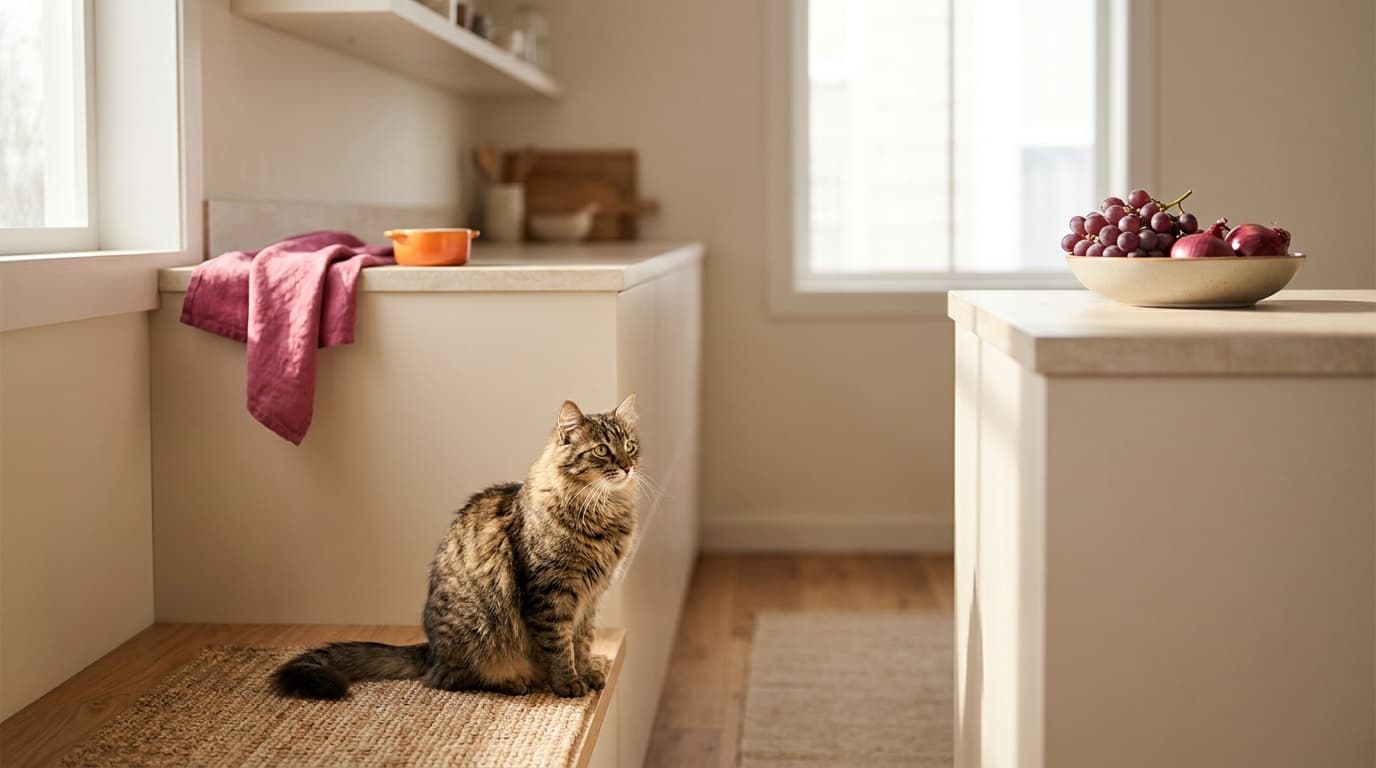
Cats are pickier eaters than dogs on average, which sometimes leads owners to assume they are also less likely to get into something dangerous. That is not quite right. Cats are often more sensitive than dogs to the same toxins, gram for gram, and a few of the biggest dangers to cats are not foods at all, they are common houseplants and household products that end up near a food bowl.
The allium family is especially dangerous for cats
Onions and catsToxic and Garlic and catsToxic damage a cat's red blood cells, and according to the Merck Veterinary Manual, cats are even more sensitive to this effect than dogs are. It takes a smaller amount of onion or garlic, cooked, raw, powdered, or dehydrated, to cause anemia in a cat than in a similarly sized dog. Onion powder in baby food, broth, or seasoning blends is a common accidental source.
Chocolate and catsToxic is dangerous to cats for the same reason it is dangerous to dogs: theobromine and caffeine. Cats are actually more sensitive to these compounds than dogs, even though they eat chocolate less often because they cannot taste sweetness. The ASPCA treats any chocolate ingestion in a cat as worth an immediate call to a veterinarian or poison control.
Grapes and catsToxic and Raisins and catsToxic carry a kidney failure risk in cats similar to what is documented in dogs, according to PetMD, even though the evidence base in cats is smaller. Veterinarians recommend treating them as off-limits entirely rather than waiting for more research.
Lilies are the danger most owners do not expect
The single most important item on this list for cat owners is not a food at all. True lilies, including Easter lilies, tiger lilies, Asiatic lilies, and daylilies, are catastrophically toxic to cats. According to the ASPCA, every part of the plant is dangerous, including pollen groomed off a cat's fur and even the water left in a vase, and can cause fatal kidney failure within days. Dogs, by contrast, typically only develop mild stomach upset from the same plant. Any household with a cat is safer without true lilies in flower arrangements or gardens at all. See Lilies and catsEmergency for the full sourced verdict.
What a caution verdict means for cats
Cats are also frequently lactose intolerant as adults, which is why dairy foods carry a caution rather than a toxic verdict: a small lick of milk or cheese is unlikely to cause serious harm, but it commonly causes digestive upset. A caution verdict means the risk depends on the individual cat and the amount, not that the food is automatically safe.
When in doubt, call first
This guide is meant to help you recognize a risk quickly, not to replace a professional judgment call about your specific cat. If your cat has eaten something on this list, or you find a chewed lily leaf and are not sure, contact your veterinarian or the ASPCA Animal Poison Control Center at (888) 426-4435 right away. For food-by-food detail and sourcing, see the full cat food safety list or search a specific food with the food checker.