A kitten's first week goes more smoothly with a small, controlled space than with full run of the house. Cats generally adjust to new environments better when they can master one room before expanding outward, and that approach also makes the first week easier to kitten-proof properly. A dedicated gear and supply guide is on the way; this guide focuses on the process, not a shopping list.
Set up one safe room first
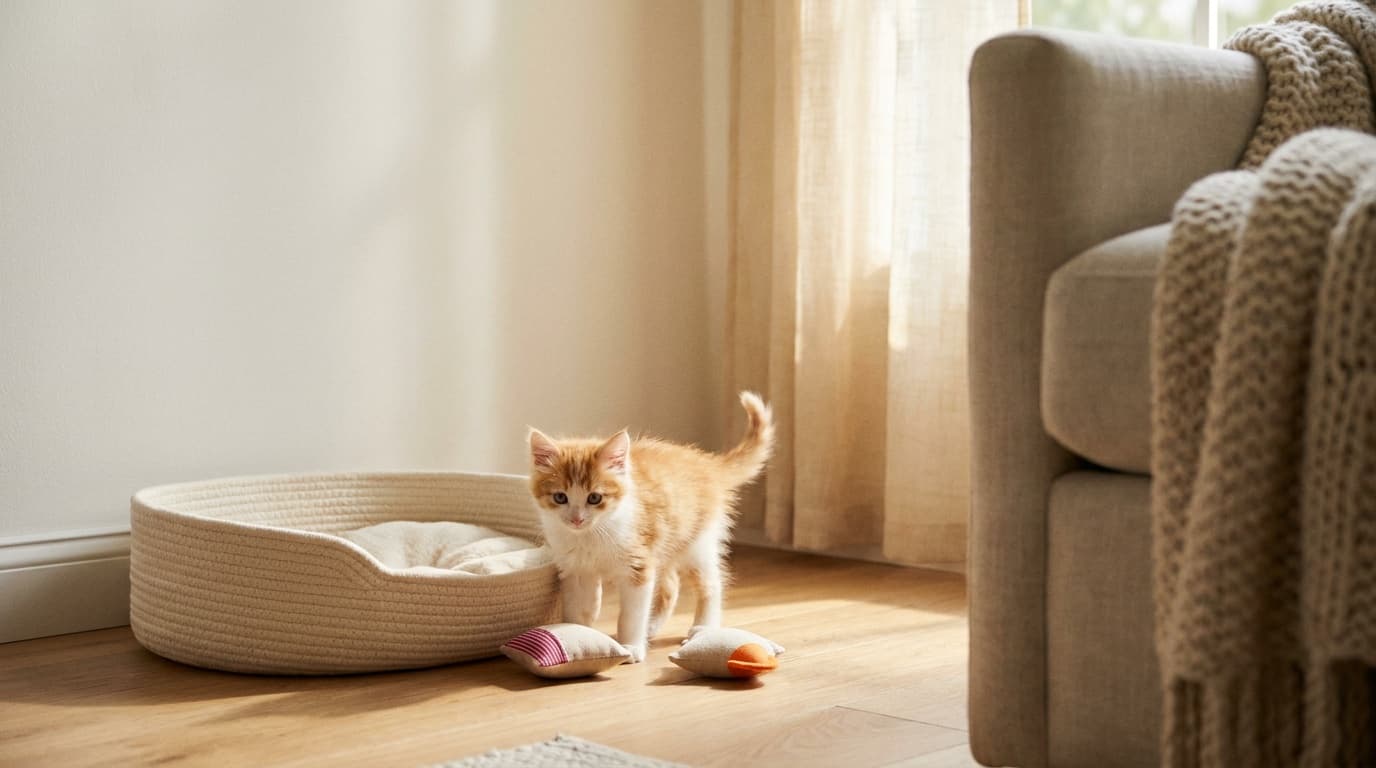
Choose a single room, a quiet bedroom or a bathroom works well, and set up food, water, a litter box, a scratching post, and a hiding spot before the kitten arrives. According to the ASPCA, starting in one contained space lets a kitten explore at its own pace and reduces the stress of an entire unfamiliar house at once. Expand access to the rest of the home gradually over the following days and weeks as the kitten seems comfortable.
Keep food and water bowls away from the litter box, and place the litter box somewhere quiet and easy for the kitten to access at all hours. If you still need to pick up a litter box, a scratching post, or a water fountain, the starter items below are a reasonable place to begin.
Litter box basics
Most kittens use a litter box instinctively with minimal training, but a few habits help in week one: keep the box in the same place, scoop it daily, and avoid switching litter types during the first week if the kitten came from a shelter or breeder already using a specific kind. If accidents happen outside the box, they are more often a sign of a box that is too far away, too dirty, or the wrong type of litter than a training failure.
Check the room for toxic plants before the kitten arrives
Beyond lilies, walk through the kitten's room for small objects, dangling cords, open containers of cleaning products, and gaps behind or under furniture a kitten could get stuck in. Kittens are agile and curious, and the safe-room setup only works if the room is genuinely kitten-proofed first.
Feeding in the first week
Continue whatever food the breeder, shelter, or rescue was already feeding for at least the first several days, even if you plan to switch brands eventually. A diet change on top of a new environment commonly causes digestive upset. If a kitten seems disinterested in food for more than a day, or shows signs of lethargy, contact your veterinarian rather than waiting, since kittens have less of a reserve to draw on than adult cats.
Schedule the first veterinary visit
Book a veterinary visit in the first week, ideally within the first few days. According to the AVMA, this visit typically covers a general health check, an age-appropriate vaccination and deworming schedule, and a conversation about spay or neuter timing. Bring any paperwork the breeder, shelter, or rescue provided, since it affects what the vet still needs to do.
What is next
Once the first week has settled, the next priorities are usually gradually expanding the kitten's territory and introducing play and scratching routines. For more gear detail, see our guides to litter boxes and clumping litter and cat trees and scratching posts. If you are unsure whether a food or plant is safe, check the cat food safety list before introducing anything new.